Communication Receiving Through Legacy of Dead Game across Canada Spirituality
What transpires when a virtual slot machine meets spiritual reflection? For numerous enthusiasts in Canada, the online experience Legacy of Dead has turned into an unexpected setting for reflection. Its Ancient Egyptian afterworld motif, loaded with gods, rulers, and symbols of immortality, reflects questions we all share about fortune and connection. This article examines how players are discovering individual meaning in the spinning of its simulated reels, using the title as a mirror for their personal paths.
The Inner Landscape of Video Games and Iconography
Video games are never just pastimes. They carry narratives, symbols, and fragments of our shared psyche. Legacy of Dead loads its reels with strong icons—golden tombs, strict deities, sacred beetles. These symbols derive from a deep well of mankind’s symbolism. For a player in the correct frame of mind, they can trigger a moment of introspection. The game’s realm becomes a canvas for reflecting on one’s own impact, or the mystery of what lies beyond.
There’s a tempo to playing slots that feels familiar to meditative practice. You place your stake, you hit the spin button, you wait. That pattern of uncertainty, suspense, and intermittent reward reflects the forbearance many develop on a personal path. The basic act of playing can turn into a quiet practice. It’s a pause, a breath, a moment to surrender and observe what surfaces. This potential converts the game from a simple diversion into a distinctive kind of virtual world.
Interpreting the Egyptian Hereafter in Legacy of Dead
Legacy of Dead isn’t merely using Egyptian theming; it constructs its complete world on such ancient teachings. The spiritual system of the pharaohs was obsessed with the soul’s path, assessment, and eternal life. The game utilizes this structure. Every icon on the reel is a component of that language. For users looking for more than a payout, these icons present a vocabulary to decipher.
Key Symbolic Figures and Their Related Meanings
To understand the metaphysical weight, you need to recognize the entities. Each one plays a role from Egyptian cosmology, reimagined now as metaphors a present-day person may discover strangely relevant.
The Pharaoh and the Deities
The adventurer icon, who pays out the highest, is you. He’s the soul journeying through the duat, the Egyptian netherworld. Then there are the gods. Anubis, with his jackal head, oversees mummification and safe passage. His arrival on a reel can evoke an acknowledgment of being in transition, of moving from one condition to another. These entities turn the game grid into a chart of spiritual journey.
Scarabs, The Eye, and Ankh Symbols
Even the smaller symbols are rich in meaning. The Scarab beetle was an emblem of rebirth, moving the sun across the sky each day. Seeing it can be a reminder of individual transformation. The Eye of Horus offers security and wholeness. The Ankh, that looped cross, is simply the symbol of existence, a pledge of everlasting life. Seeing these symbols appear repeatedly can concentrate the mind on these timeless notions.
Interpreting the Signals: Moving from Symbols to Inner Understanding
What form do these signals take? They are rarely direct instructions. Instead, they are individual symbols drawn from your interaction with the game. Their meaning relies completely on your life and your current questions.
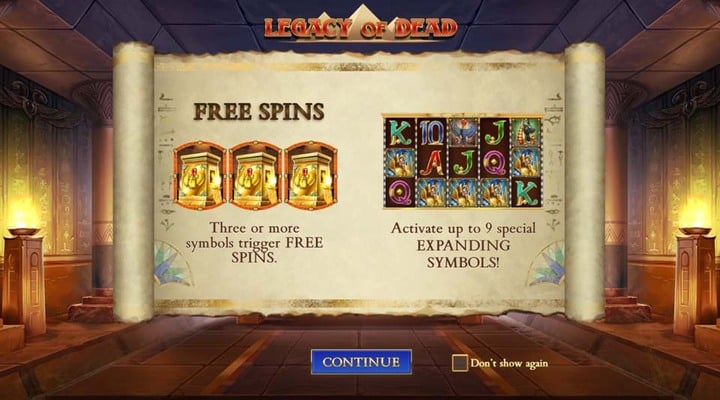
Picture a spin filled with Ankh symbols. For you, that might translate to a reminder to check in on your own vitality, or the life force of a project. Triggering the Free Spins feature with the expanding Pharaoh can be a prompt to own your authority in a difficult situation. The trick is to notice what catches your attention, then sit with that feeling after you log off.
Also a long run of losing spins holds potential meaning. Instead of just bad luck, it might become a lesson in patience. It could teach detachment from a specific outcome, or the value of staying on your path even when rewards aren’t immediate. This reframing changes frustration to a chance for contemplative learning.
Systems as Symbol: Spins, Danger, and Insight
The way the game functions can itself be understood as a type of lesson. The mechanics aren’t simply random; they form a framework that echoes spiritual ideas. Engaging becomes an dynamic engagement with notions of destiny, decision, and revelation.
- The Turn: This is your move, your tossed question. It’s a letting go of command, a small step into chance.
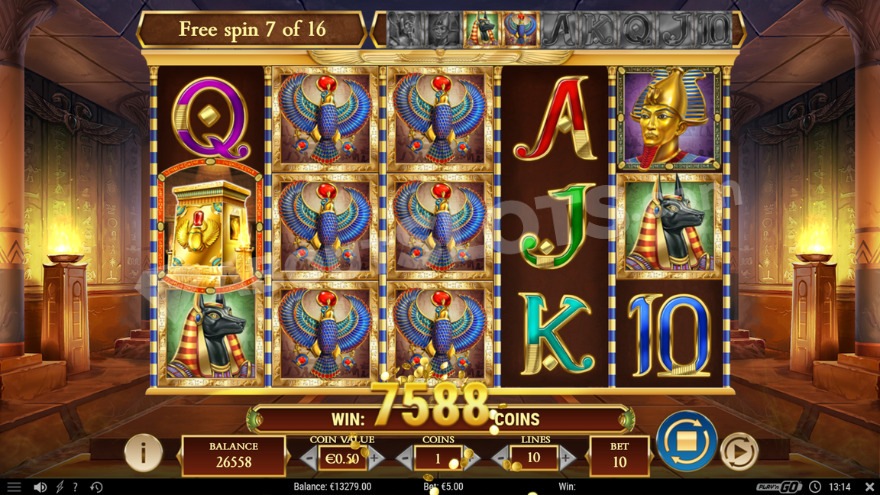
- Complimentary Reels & Expanding Symbols: Think of these as times of blessing or abrupt understanding. When one icon expands to occupy a entire strip, it’s like a solitary notion flowering to saturate your mind, providing a sharper view.
- The Double-Up Mechanic: This reflects the danger built-in in any profound exploration. After a win, you can decide to risk it for a chance at greater. It’s the spiritual parallel of opting to embrace uncertainty, knowing you might walk away with less, or with greater.
- Variance: Legacy of Dead is a high-variance title. Victories are rarer but can be bigger. This structure mirrors the uneven tempo of many private paths—long periods where not much seems to transpire, interrupted by unexpected, significant events.
Guiding and Reflection: The Player’s Outlook
This approach fails if you’re merely observing your account. The shift happens in the player’s head. You need moving from a mentality of profit to one of open awareness. The session becomes less like a random draw and more like an interactive focus point, a digital arena where archetypes might appear.
Try setting a calm purpose before you spin. It doesn’t have to be complicated. You might be pondering about a life decision, or you aim to be open to whatever the game delivers. While the reels spin, watch for more than payout lines. Notice which images cluster together. Pay attention to the inner hunch each spin gives you. The «message» isn’t usually shouted; it’s a gentle whisper that forms in the space between the icons and your personal thoughts.
Setting up a Ritual Space
You can strengthen this approach with a straightforward practice. Declutter the clutter from your workspace. Minimize unnecessary browser tabs. Take three deliberate breaths to find your focus. By treating this time as separate from casual scrolling or gaming, you signal to your deeper self that you’re entering a space for reflection. This small act enables you to connect with the icons on a deeper level.
Ethical Considerations and Practical Practice
Combining the mystical and wagering demands grave caution. We need to state this clearly: Legacy of Dead is designed for recreation. Its outcomes are determined by a random number generator, not by supernatural forces or ancient voices.
Never let a quest for significance become an justification for excessive play. Set clear, non-negotiable boundaries on your duration and spending. Real-world connections and traditional spiritual practices should consistently come first. This in-game reflection should merely be a trivial supplement. Stay anchored in the material world.
Upholding Balanced Boundaries
Draw your limits before you begin. Decide you will play for twenty minutes, Legacy Of Dead, or that you will cease if you lose a set value. Then follow that approach, no matter what patterns you think you see or what intuition you sense. This self-control keeps the activity a controlled investigation. It prevents it from sliding into anything compulsive. Your real-world well-being is the sole focus that counts.
FAQ
Is Legacy of Dead really designed for spiritual messaging?
Certainly not. Play’n GO developed the game as an entertaining video slot. The spiritual layer is an experience some players add themselves, viewing its powerful themes and imagery from a personal perspective. It’s a user-generated practice, not an intended feature.
Can one truly receive messages from ancestors through a slot game?
Think of it more as a catalyst. The themes of legacy and the hereafter might stir your own thoughts about your lineage or life story. Most insights are self-generated, utilizing the game’s visuals as a cue for introspection, rather than a communication channel to the dead.

What might be the most spiritually meaningful icon in Legacy of Dead?
A lot of people cite the Ankh, the classic symbol for eternal life. The Scarab beetle, standing for renewal, is nearly as significant. However, the real answer depends on the individual. The symbol that holds the most importance is the one that repeatedly catches your eye and seems imbued with significance as you play.
Does this practice necessitate acceptance of Egyptian deities?
No faith is required. One can consider the Egyptian gods as a collection of archetypal figures or universal personas. Anubis stands for direction through transformation. Osiris stands for renewal and resurrection. You may engage with these concepts on a psychological or metaphorical level, without any literal faith in the old gods.
How is this different from gambling myth?
Superstition tries to sway luck— knocking on timber, wearing a lucky shirt. The contemplative approach isn’t about controlling the outcome. It focuses on finding self-awareness, win or lose. The key contrast is your aim: one pursues external gain, the other targets self-reflection, always adhering to responsible gambling boundaries.
What risks come with combining mindfulness and playing slots?
Risks are definite. The biggest danger is misinterpreting a sense of spirituality as an indication to stay at the game past your limits. It can morph into a dangerous rationale for pursuing losses. That’s why the rules about time and financial limits are non-negotiable. Treat this as a quick mindfulness exercise, never as a directive for your wagering choices.
Can I practice this with other themed slot games?
Certainly. Any slot game with a deep world of symbols can work. Games inspired by Norse myths, Asian myths, or even space exploration provide their own imagery sets. The essential part is selecting a subject that connects with you on a personal level, one whose symbols can act as mirrors for your own thoughts and questions.